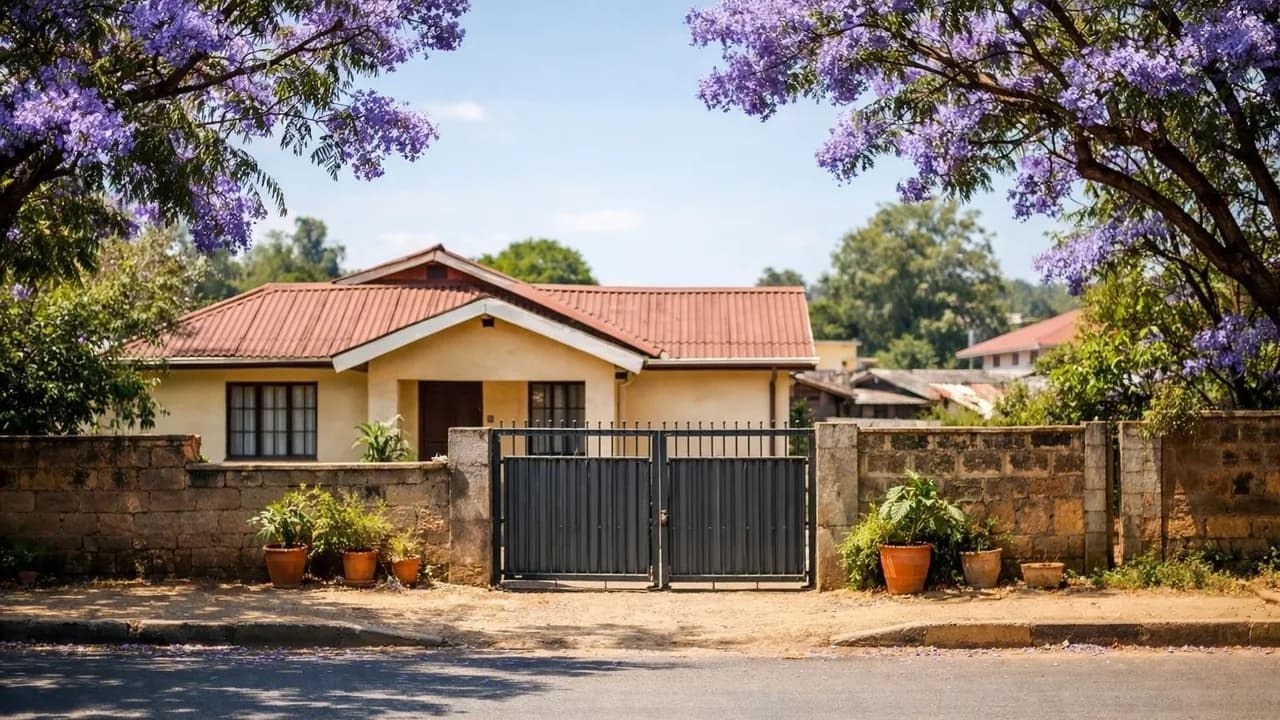
To get a Taqwa SACCO loan you must first be a member (KES 1,500 registration for BOSA and FOSA, or KES 500 for FOSA only, plus share capital), hold an active FOSA account for at least three months, and show repayment capacity through payslips or M-Pesa or bank statements. The five products are an Emergency Loan up to KES 200,000 over 12 months, a School Fees Loan up to KES 500,000 over 24 months, a Business Loan up to three times your savings capped at KES 3 million over 4 years, Asset Finance up to KES 5 million over 60 months, and Mortgage Finance up to KES 10 million over 120 months. Taqwa prints a 10% p.a. reducing-balance profit rate on the asset and mortgage products; the other three are quote-only.
Ready to compare halal options?
Why Taqwa's licence matters before you borrow
Taqwa Savings and Credit Co-operative Society was established in 1998 and calls itself the first Shari'ah-compliant financial institution in Kenya. More usefully for a borrower, it is No. 137 in Schedule I of SASRA's list of SACCO societies licensed to undertake deposit-taking business for 1 January to 31 December 2026, one of 176 such societies and the only Islamic one. That licence brings SASRA's prudential supervision of capital and liquidity, which is why the SACCO can run FOSA current and salary accounts that a loan is repaid from. It does not bring deposit insurance; KDIC covers banks only. The whole-institution story, governance and history are in our Taqwa SACCO guide; this page is only about borrowing.
The SACCO operates from the ground floor of Jamia Plaza on Kigali Street in Nairobi, with phone lines on 0700 33 22 11, 0786 33 22 11 and 0721 33 22 11 and email at info@taqwasacco.co.ke and customercare@taqwasacco.co.ke. Its site lists no other branch. If you have read elsewhere about a Mombasa presence, confirm it by phone, because the contact page we read on 23 September 2026 names Nairobi only. Members are counted at 13,500 and above on the About page and 13,250 and above on the membership page, drawn from Kenya, East and Central Africa and the diaspora.
Step one: membership, share capital and documents
Membership is open to Kenyans and non-Kenyans of any faith who want finance run on the no-riba principle. The base documents are a copy of your national ID, alien ID or passport (or a birth certificate for a minor's account), a copy of your KRA PIN certificate, coloured passport photographs, a recent payslip, letter of appointment or M-Pesa or bank statement, and the completed membership form. The registration fee is KES 1,500 for both BOSA and FOSA or KES 500 for FOSA only. BOSA is the back-office side where your non-withdrawable savings and share capital sit and loans are built on them; FOSA is the front-office banking side with withdrawable accounts.
Share capital is the one number the site leaves ambiguous. The About page shows a figure of 15,300 under the label Share Capital, next to the membership and award counts, with no currency symbol. We read it as a minimum share capital of KES 15,300, but the SACCO should confirm this and tell you whether it can be paid in instalments. You can download the BOSA or FOSA application form and email it with the documents to taqwasacco1@gmail.com, apply online, or walk into Jamia Plaza. The forms and the office are the only three routes the site describes.
Step two: the three-month rule and what counts as capacity
Both the Mortgage Finance and Asset Finance pages require an active FOSA account held for a minimum of three months before you can borrow, and the asset page adds that you must hold at least one share capital unit. The other three loan pages do not print a waiting period, but a new member should assume the same three months applies and ask. Repayment capacity is evidenced by certified payslips for the last three months if employed, or M-Pesa or bank statements if self-employed. There is no printed minimum salary, no debt-to-income ratio and no stated maximum age, so these are questions for the loans officer.
The Business Loan is the only product priced off your savings: up to three times what you hold in the SACCO, capped at KES 3 million. That multiplier makes BOSA savings the lever. A member with KES 400,000 in savings can ask for KES 1.2 million; a member with KES 1 million hits the cap. The site does not say whether share capital counts towards the multiple or whether guarantors can top it up. For school fees and emergency loans the pages print only the cap and tenor, so ask what multiple, if any, applies.
The five financing products side by side
Every Taqwa page calls the product a loan and describes it as Shari'ah-compliant with no interest, but, unlike Crescent Takaful Sacco, Taqwa does not name the contract (Murabaha, Musharaka, Ijara) on the product page. The 10% p.a. on a reducing balance that it prints for asset and mortgage finance is a profit rate on a sale or partnership structure, not interest, and you should ask which contract your facility uses and get it in the offer letter. The table shows what is printed; blank spaces are the SACCO's silence, not ours.
| Product | Maximum | Tenor | Printed cost | Security or condition printed |
|---|---|---|---|---|
| Emergency Loan | KES 200,000 | 12 months | Quote-only | None printed beyond membership |
| School Fees Loan | KES 500,000 | 24 months | Quote-only | None printed beyond membership |
| Business Loan | 3x savings, cap KES 3 million | 4 years | Quote-only | Savings multiple |
| Asset Finance | KES 5 million | 60 months (36 if secured on a logbook) | 10% p.a. reducing balance | Title deed or logbook, sale agreement, 3 months FOSA, one share |
| Mortgage Finance | KES 10 million | 120 months | 10% p.a. reducing balance | Logbook or title deed, 3 months FOSA, payslips or statements |
Asset Finance is broader than the name suggests: the page lists motor vehicles, plots and land, construction, working capital and more. A logbook-secured facility is cut to 36 months, so a car financed through Taqwa is a three-year commitment rather than five. Mortgage Finance accepts a logbook as well as a title deed as collateral, which is unusual and worth asking about if your land is not yet titled. For the wider set of halal home options, including the bank products that go to longer tenors, see the home financing comparison.
Documents for a financing application
The Asset Finance page carries the fullest checklist and is the best guide to what the loans desk will ask for on any secured facility. Prepare the following before you visit Jamia Plaza, and have the originals with you for certification.
- A duly filled facility application form, available from the office or the downloads page.
- A notarised sale agreement or letter of offer for the asset you are buying.
- A copy of the security document, usually the title deed or the logbook.
- Certified copies of your payslips for the last three months, or M-Pesa or bank statements if you are self-employed.
- A certified copy of your ID or passport and a copy of your KRA PIN certificate.
- Two recent coloured passport-size photographs.
- Evidence that you have been an active member for at least three months and hold at least one unit of share capital.
The SACCO's About page promises quick turnaround on loan approval but prints no number of days, so ask the officer for the current processing time and whether disbursement goes to your FOSA account or directly to the seller. Direct payment to the seller is what a Murabaha or Musharaka purchase should look like; if the SACCO pays cash to you to buy the asset yourself, ask how the contract is documented. Our explainer on Murabaha versus Tawarruq covers why that distinction matters.
What a 10% reducing rate means in shillings
Taqwa is one of very few Kenyan Islamic lenders to print a headline rate. On a reducing balance, profit is charged on what is still outstanding each month, so the cost falls as you repay, unlike a flat rate that charges on the original amount throughout. The site does not publish a repayment calculator, an arrangement fee, a valuation fee, a takaful requirement or an early settlement rule, so the 10% is the start of the conversation rather than the all-in cost. Ask for a full repayment schedule, the documentation fee in shillings, who pays for valuation and security registration, and whether early settlement reduces the total profit.
For context, Crescent Takaful Sacco prints expected profit of 12% to 18% on its asset finance, mostly flat, and the Islamic banks generally do not print rates at all, directing customers to the Central Bank's total cost of credit site. On the published numbers alone Taqwa is the cheapest printed halal asset finance from a co-operative in Kenya. Whether it remains cheapest after fees depends on the quote. Our personal financing hub and the education financing hub line up the alternatives for the smaller loans.
Ethical investments financed through the SACCO
Taqwa also sells its own investment projects and finances members into them. The Ethical Investments page lists 50 by 100 plots at Konza from KES 450,000 and quarter-acre plots at Ngatataek, Kajiado, from KES 550,000, with a title processing fee of KES 49,000 and booking on a first-come basis. Salsabil Heights is a female-only hostel studio project in Parklands with a projected KES 75,000 monthly return, and the Jabavu programme is affordable housing at Park Road, Ngara. Eligible members can take Asset Finance over up to 60 months for Jabavu and the plots, and 72 months for Salsabil Heights.
Treat these as a seller's terms. The projected return on Salsabil Heights is the SACCO's figure, the plots are sold by the SACCO that is also financing you, and the longer 72-month tenor applies only to its own project. None of that is improper for a co-operative, but a member should separate the decision to borrow from the decision to buy, and compare the Konza and Kajiado pricing with the open market before using the finance.
The decision
If you are salaried, can route your pay through a Taqwa FOSA account and want a car, plot or house financed at a printed 10% reducing rate from a SASRA-licensed Islamic institution, Taqwa is the first co-operative to call. Open the FOSA account now, because the three-month clock starts at opening, and build BOSA savings if a business loan is the goal, since the three-times multiple is the only route to the KES 3 million cap. Ask for the contract name, the documentation fee in shillings and the full schedule before you sign.
If you need group-based or livestock-backed finance in the north-east, or you want to see the Shari'ah contract printed on the product page, Crescent Takaful Sacco is the other Islamic co-operative, with the regulatory caveats set out in that review. If you need more than KES 10 million or a tenor beyond ten years, you are in bank territory. Facts checked against taqwasacco.co.ke, sasra.go.ke and gaa.go.ke on 23 September 2026.
Frequently asked questions
What are the requirements for a Taqwa SACCO loan?
You must be a registered member with an active FOSA account for at least three months and at least one unit of share capital, and show repayment capacity through three months of certified payslips or M-Pesa or bank statements. Secured products need a title deed or logbook and a notarised sale agreement. Membership itself needs an ID or passport, KRA PIN, photographs, the form and a KES 1,500 or KES 500 registration fee.
How much can I borrow from Taqwa SACCO?
The caps are KES 200,000 on the Emergency Loan, KES 500,000 on the School Fees Loan, three times your savings up to KES 3 million on the Business Loan, KES 5 million on Asset Finance and KES 10 million on Mortgage Finance. Tenors run from 12 months on emergencies to 120 months on mortgages. Logbook-secured asset finance is limited to 36 months.
What profit rate does Taqwa SACCO charge?
Taqwa prints 10% per annum on a reducing balance for Asset Finance and Mortgage Finance. It does not print a rate for the Emergency, School Fees or Business Loans, nor any documentation, valuation or settlement fees, so those are quote-only. Ask for a full repayment schedule and the fees in shillings before accepting an offer letter.
Does Taqwa SACCO have a branch in Mombasa?
The SACCO's website lists one location, the ground floor of Jamia Plaza on Kigali Street, Nairobi, with three phone numbers and two email addresses, plus a member portal, a chatbot and a help desk. No Mombasa or other branch is printed on the contact page we read. Call 0700 33 22 11 to confirm whether any coast presence exists before travelling.
Is Taqwa SACCO regulated by SASRA?
Yes. Taqwa Sacco Society Ltd is No. 137 in Schedule I of SASRA's list of SACCO societies licensed to undertake deposit-taking business for the period 1 January to 31 December 2026, with its address given as Jamia Plaza, Kigali Street, Nairobi. It is the only Shari'ah-compliant SACCO on that schedule. SASRA supervision is prudential; it is not deposit insurance.
Compare providers in your county
See side-by-side comparisons of Shariah-compliant products, or let our matcher recommend the best options for your situation.
Can I take a Taqwa SACCO loan without salary check-off?
The product pages accept M-Pesa or bank statements as evidence of income for the self-employed, so a payslip is not the only route. What you cannot avoid is the FOSA account requirement on the secured products: the mortgage and asset finance pages both require an active FOSA account for three months. Ask whether business or emergency loans can be repaid from an external account.


