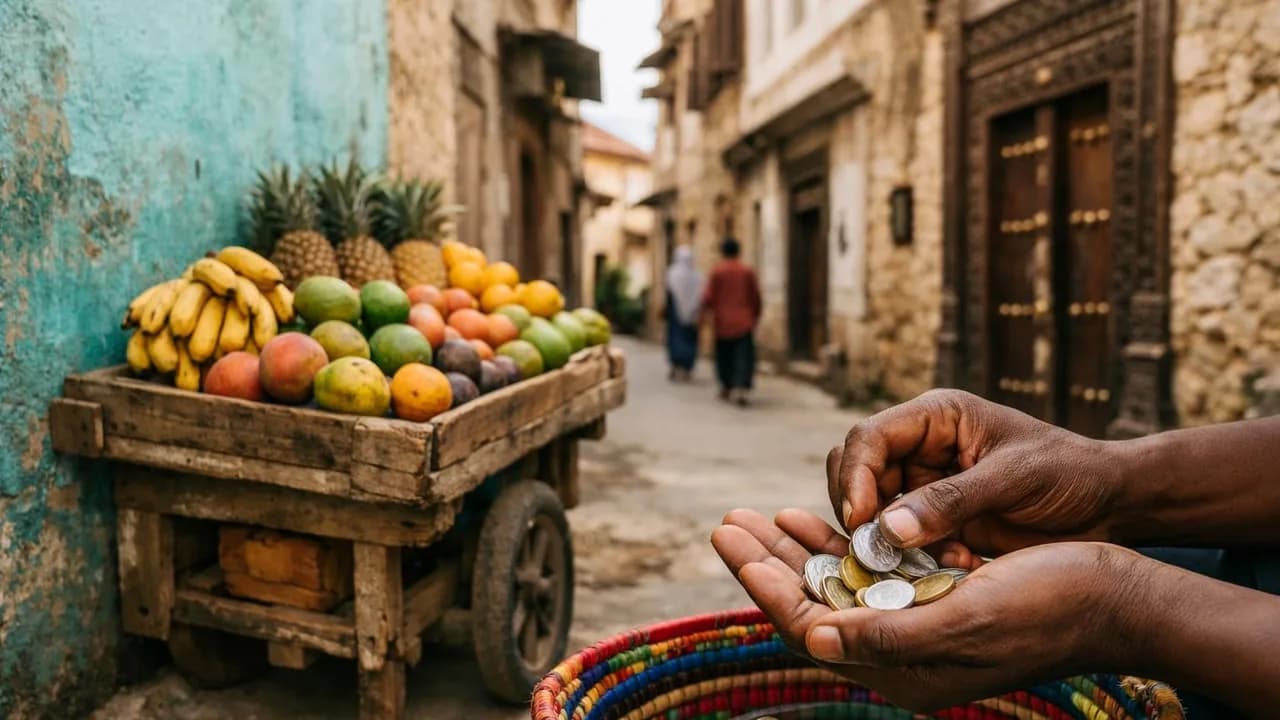
It depends on the model, not the name. A rotating merry-go-round, where members contribute a fixed sum and each takes the pot in turn, is a chain of reciprocal interest-free loans and is permissible in the view of most contemporary scholars. Table banking that lends the pooled fund to members or outsiders at a percentage is riba, whatever the percentage is called. An investment chama that buys land, builds rentals or holds screened shares and splits profit by contribution is a Musharaka and permissible with conditions. Welfare funds are charity and permissible. The problems hide in constitutions: interest on arrears, fines kept as income and an interest-bearing bank account. The is it halal hub holds our other verdicts.
Ready to compare halal options?
The four chama models and the ruling on each
Kenyan chamas mix four activities under one constitution, and each needs its own ruling. The merry-go-round (rotating savings) moves money between members without anyone gaining more than they put in. Table banking (accumulating savings and credit) builds a fund and lends it out, usually at a monthly percentage, and distributes the earnings. The investment chama pools capital to buy an asset or a portfolio. The welfare or benevolent fund collects fixed contributions and pays out on bereavement, illness or a wedding. A chama that does only the first and fourth is halal by default; one that does the second is not; one that does the third is halal if it screens what it buys and shares risk honestly.
| Chama model | What actually happens | Ruling | Fix if needed |
|---|---|---|---|
| Rotating merry-go-round | Equal contributions; each member takes the pot once in turn | Permissible: reciprocal qard | Keep contributions and payouts equal; no fee for an early slot |
| Table banking at a percentage | Pooled fund lent to members or outsiders at monthly interest | Riba: not permissible | Convert to Murabaha asset purchases, Qard Hasan or Musharaka; stop charging on money |
| Investment chama | Capital pooled to buy land, rentals, shares or a business | Permissible with screening and risk sharing | Screen shares; share profit by agreement and loss by capital; no guaranteed return |
| Welfare fund | Fixed contributions paid out on need | Permissible: tabarru (donation) | Keep it in a non-interest account; do not lend it at a charge |
| Late fines kept as income | Penalty added to arrears and shared out | Not permissible as income | Route fines to a charity account or cap them at actual cost |
| Interest-bearing chama bank account | Bank credits interest on the pooled balance | Interest is riba | Move to a Mudarabah or non-interest group account |
Why the merry-go-round is permissible: reciprocal qard
In a twelve-member merry-go-round each member pays, say, KES 5,000 a month and receives KES 60,000 once. The member who receives first has borrowed KES 55,000 from the others and repays it over eleven months; the member who receives last has lent to everyone and is repaid in month twelve. No one receives more than they contribute, so there is no riba. Classical jurists debated whether the benefit of knowing you will be lent to in turn is a prohibited "loan that draws a benefit"; the dominant modern position is that the benefit is mutual, equal and not at any lender's expense, so the arrangement is a permissible cooperative loan, and the fatwa councils that have ruled on rotating savings associations have generally allowed them.
Three conditions keep it clean. Contributions and payouts must be equal for every member; a chama that lets a member buy an earlier slot by paying extra has turned the ordering into a price for a loan. The order must be fixed by agreement or lot, not auctioned. And a member who drops out must be refunded what they paid in minus what they received, nothing more and nothing less. Our article on halal investing with small amounts in Kenya covers what to do with a payout once it arrives.
Why table banking at a percentage is riba
Table banking lends money and charges for the loan. When a chama lends KES 20,000 to a member at a monthly percentage and the member repays more than KES 20,000, the excess is riba al-qard, interest on a loan, and it does not matter that the lender is a group of neighbours, that the rate is modest or that the proceeds are shared equally. The prohibition attaches to the contract, not the identity of the parties. Lending the fund to outsiders at a rate is the same ruling with the added problem that the group is now an unlicensed money lender.
The fix is to change what the chama does with the fund, not to rename the charge. A chama may buy an asset a member needs and sell it to them at a disclosed mark-up payable in instalments (Murabaha); the profit is on a sale, and the chama bears ownership risk between purchase and sale. It may lend at zero charge (Qard Hasan) and recover only actual costs such as M-PESA fees. It may invest the fund in a member's business for a share of real profit and loss (Musharaka or Mudarabah). What it may not do is receive back more money than it lent on the basis of time alone. Our verdict on Fuliza, M-Shwari and Tala applies the same test to the apps your members use.
Investment chamas: screening, land, rentals and profit sharing
An investment chama is a Shirkah, a partnership in capital, and its rules are the rules of Musharaka. Profit may be split by any ratio the members agree, including a larger share for whoever manages the project, but loss must be borne strictly in proportion to capital, so a constitution that guarantees any member their capital back or promises a fixed return on contributions is not permissible. The assets must be lawful: land, buildings, rental housing, matatus, farming, a shop or a screened share portfolio are fine; a bar, a betting outlet or the shares of a conventional bank or insurer are not.
Rental income is permissible, and so is capital gain on land. Share portfolios need a screen: avoid companies whose main business is prohibited, and treat interest-heavy balance sheets with the thresholds a recognised screening standard uses rather than guessing. Dividends from mixed companies carry a small impermissible slice that should be given away. Members whose chama holds shares, land or a business also owe zakat on their share each year; our zakat calculation guide for Kenya explains how to value a chama interest. The halal investing hub lists the Shariah funds a chama can use for pooled money.
The clauses that make a chama haram, and their halal replacements
Most chamas are not designed to earn riba; they inherit template constitutions that assume it. Read yours for these clauses.
- "Loans attract interest of X% per month": replace with Murabaha purchase terms, Qard Hasan at zero charge, or a Musharaka profit-and-loss share.
- "Late contributions attract a fine of KES Y which is added to the fund": keep the fine as a deterrent but pay it into a separate charity account; the group may not profit from a member's lateness.
- "Interest on arrears accrues daily": delete; arrears on a Qard or Murabaha cannot grow with time.
- "The treasurer shall place the funds in an interest-earning account": replace with a Mudarabah savings account or a non-interest current account at an Islamic bank or window.
- "Members are guaranteed a minimum return of Z% on investments": delete; returns must be actual profit and capital is at risk.
- "Members may buy an earlier merry-go-round slot for a premium": delete; slots are fixed by agreement or lot and payouts stay equal.
- "Surplus from welfare contributions is distributed as dividends": keep welfare money as donation; roll surplus forward or give it to charity.
Where to bank a chama without interest
The account is the easiest fix. Premier Bank Kenya prints an Ufanisi Chama Account for investment groups with an opening and operating balance of KES 1,000 and an account maintenance fee of KES 100, giving the chama access to financing as a group. KCB Sahl Banking prints a Ta'awun (Tuungane) Current Account for investment groups with a minimum membership of five, nil minimum deposit, nil monthly ledger fee, free e-statements, a cheque book, quarterly chama training, deposits through any KCB branch, KCB Mtaani agent or paybill 522522, and eligibility for Biashara Club benefits including a 1% facility profit concession. KCB Sahl's Simba Savings Tuungane Investment Account opens at KES 1,000 with no monthly charge and a KES 100 withdrawal fee, and may pay a return on the basis of Hiba, a gift rather than a promised rate.
Gulf African Bank's group and business accounts are covered, with the other options, in our halal chama accounts comparison; its Umma account, which opens at KES 10,000, is written for charitable institutions rather than investment groups. Crescent Takaful Sacco markets a chama suite, but its website was unreachable when we checked, so we do not quote its terms here. A conventional bank's chama account that credits interest is the single most common way an otherwise halal chama earns riba, and moving the account is a one-afternoon job.
Group financing without riba: what KCB Sahl's Tuungane facility shows
A chama that wants to borrow for a project has a halal template in KCB Sahl's Ta'awun (Tuungane) Investment Facility. The page prints financing of up to ten times the group's savings, capped at KES 250 million, over up to 72 months, with the bank financing 90% of the investment and the group contributing 10%, and 90% of monthly contributions committed to repayment. It is open to registered and unregistered groups of 5 to 50 members, requires six months of banking history (or an immediate account with KCB if the history is elsewhere), and is secured by what is bought, by land, by a lien on a fixed deposit or by NSE-quoted shares. The group needs its registration certificate, constitution, signed minutes authorising the account, members' list, signatories' IDs and KRA PINs, and a KES 1,500 search fee.
The lesson for a chama's own lending is in the structure: the bank finances a specific asset, shares in it or sells it on, and takes the asset as security. A chama that lends to its members should copy that pattern, buying the item and selling it on at a disclosed mark-up, rather than handing over cash and charging for time. The bank accounts hub lists every Islamic group account by fee.
The decision
If your chama is a pure merry-go-round with equal slots and a welfare kitty, it is halal; move the account to a non-interest group account at Premier, KCB Sahl or Gulf African and carry on. If your chama runs table banking at a percentage, the lending model is riba and the earnings from it are not yours to keep; call a meeting, amend the constitution to Murabaha or Qard Hasan terms, give away the interest already earned, and reopen lending under the new rules. If your chama invests, screen the assets, delete any guaranteed return, write the loss-sharing rule in proportion to capital, and pay zakat on your share annually.
A treasurer who cannot get the members to agree should at least move the account so the group stops earning bank interest, and should keep their own share of any lending profit separate and give it away. A member of a chama that refuses to change should take their merry-go-round turn, decline the lending dividend, and start a compliant group with the members who agree. Facts checked against premierbank.ke, ke.kcbgroup.com, gulfafricanbank.com on 5 October 2026.
Frequently asked questions
Is a merry-go-round halal in Islam?
Yes, in the view of most contemporary scholars. Each member contributes the same amount and receives the same pot once, so no one gains more than they put in; the arrangement is a chain of reciprocal interest-free loans. Keep contributions and payouts equal, fix the order by agreement or lot, and never sell an earlier slot for a premium.
Is table banking haram?
Table banking that lends the pooled fund at a percentage is riba and not permissible, regardless of the rate or who receives the earnings. Table banking that buys assets for members and sells them at a disclosed mark-up, or lends at zero charge recovering only actual costs, is permissible. The ruling follows the contract, not the name.
What should a chama do with interest it has already earned?
Give it away to the poor or to a charitable cause without expecting reward, and do not distribute it as dividends or spend it on the group's expenses. Separate the interest from the members' own contributions using the bank statements or the lending ledger, pay out the clean money, and dispose of the rest. Then amend the constitution so it does not recur.
Can a chama charge late fines?
A fine as a deterrent is accepted by many scholars provided the group does not profit from it. Pay fines into a separate charity account rather than the fund that is shared out as dividends, or limit the charge to the actual cost the lateness caused. A fine that grows with the length of the delay on a loan is interest and must be removed.
Which bank account should a halal chama use in Kenya?
Any group account that pays no interest. Premier Bank's Ufanisi Chama Account opens at KES 1,000 with a KES 100 maintenance fee; KCB Sahl's Ta'awun (Tuungane) Current Account has nil minimum deposit and nil ledger fee for groups of five or more; KCB Sahl's Tuungane Investment Account opens at KES 1,000 and may pay a Hiba return. Gulf African Bank offers group accounts too.
Compare providers in your county
See side-by-side comparisons of Shariah-compliant products, or let our matcher recommend the best options for your situation.
Do I pay zakat on my chama savings?
Yes. Your share of the chama's cash, shares and trading stock is your wealth and counts toward nisab each lunar year; rental land and buildings are not zakatable themselves but their rental income is once it sits in the account. Merry-go-round contributions you have paid but not yet received are loans owed to you and most scholars include them. Our zakat guide has the method.