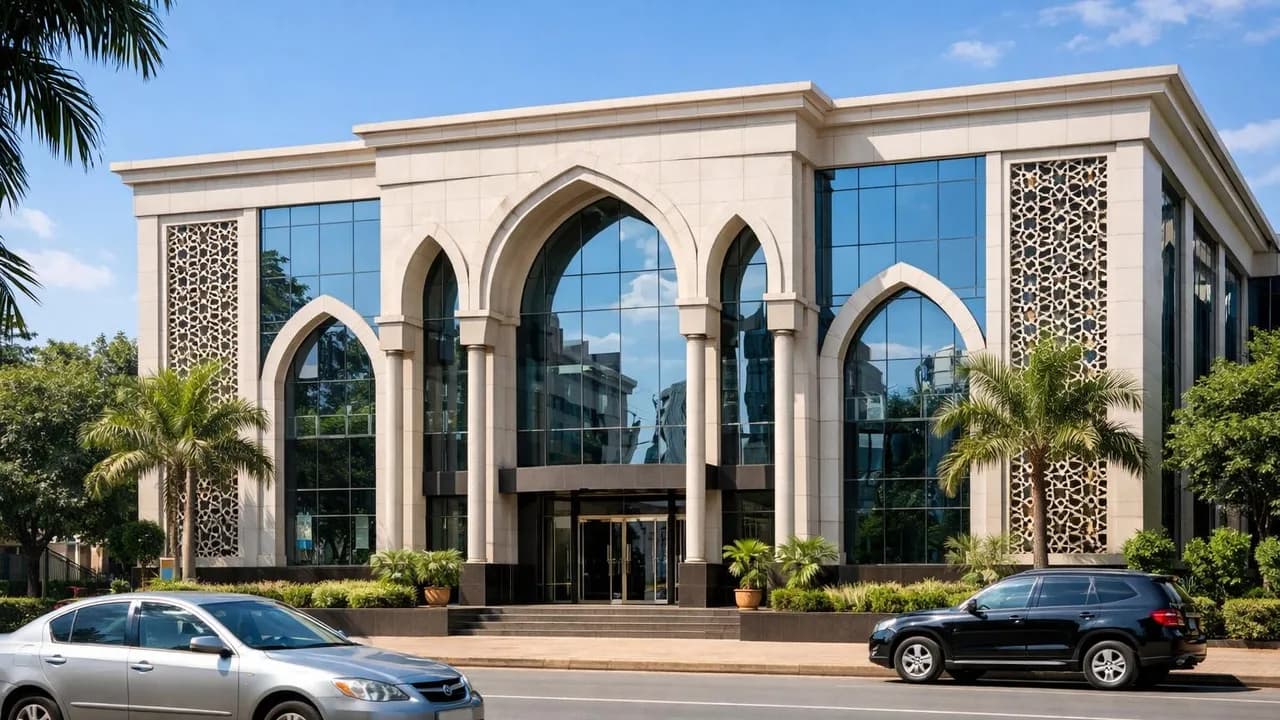
Standard Investment Bank (SIB) is a legitimate, regulated institution: a Nairobi investment bank founded in 1995, licensed by the Capital Markets Authority, listed as trading participant B20 on the Nairobi Securities Exchange, and an authorised Central Depository Agent of the CDSC. SIB Najah is its Islamic investment banking division, launched in 2023 with a four-person Shariah Advisory Board named on the SIB website. Its flagship Mansa-X Shariah Special Fund is a Special Collective Investment Scheme licensed by the CMA, with KES 3.6 billion in the shilling fund at the end of June 2026 according to SIB's own press release. The institution is real. The questions worth asking are about fees, lock-ins and what is not published, which is what the rest of this halal investing review covers.
Ready to compare halal options?
Which licences SIB actually holds, and where to check them
SIB's own history page gives the regulatory trail. The firm was registered as Standard Stocks Ltd on 7 February 1995 with five staff and a stockbroking licence, became a licensed investment bank in 2003, opened a corporate finance desk in 2005 and obtained a unit trust licence in 2007. In December 2018 the CMA granted it Kenya's first Money Manager licence, under which Mansa-X was launched. SIB says the Money Manager products have since moved to the Special Collective Investment Scheme bracket, and its home page describes SIB as the first Special CIS licensed in Kenya in 2024. In March 2024 the Retirement Benefits Authority licensed it as a fund manager for retirement savings.
Two independent checks are possible without taking SIB's word for it. The NSE's list of trading participants, which we fetched on 24 September 2026, shows Standard Investment Bank Ltd as participant B20 at the 16th floor of JKUAT Building on Kenyatta Avenue. SIB also prints a Legal Entity Identifier and a FATCA Global Intermediary Identification Number on its about page, both of which can be searched on the GLEIF and IRS registers. The CMA publishes licensee lists on cma.or.ke; the specific URL changes, so search the site for the current list rather than relying on a saved link.
On the 'is Mansa-X regulated by CMA' question specifically: SIB's September 2026 press release describes the Mansa-X Special Funds as a Special Collective Investment Scheme licensed and regulated by the CMA, managed under an umbrella called Standard Investment Trust Funds (SITF). The same release cites the CMA's own Collective Investment Schemes quarterly report for Q2 2026 as the source for its market share numbers, which means the regulator is reporting on these funds as licensed schemes.
Who sits on the Najah Shariah Advisory Board
SIB publishes the names of its Shariah Advisory Board on the Najah about page, which is more than most Kenyan fund managers do. The chairman is listed as Islam Mohamed Salim, PhD. The members are Sheikh Abdirahman D Guhad and Sheikh Ibrahim Rashid Mohamed, and the secretary is Khalfan Abdallah Salim, who also appears on the management page as Head of Product Development and Shariah Compliance. The executive director for Islamic investment banking is Abdullahi Omar Adan. If you want to see how this compares with the governance of other Kenyan halal products, our analysis of who certifies halal investments in Kenya sets out the gap.
The board does visible work. SIB's research desk publishes a periodic Shariah compliance screening of NSE-listed companies, and a blog post dated 23 September 2026 explains that in the H2 2026 update the board reclassified TotalEnergies Marketing, Crown Paints, Kapchorua Tea and BOC Kenya as non-compliant and moved them to divest recommendations. The same report tells clients who realised a capital gain on those shares to contact SIB for a purification figure. That is the kind of ongoing monitoring a Shariah screen is supposed to produce, and it is rare to see it in print in Kenya.
What SIB does not publish on the pages we fetched is the numerical screening methodology: the debt, cash and impermissible-income thresholds it applies, or which standard (AAOIFI or an index provider's rules) it follows. Its blog describes the two-stage business and financial screen in general terms and its disclaimer says the halal label refers to SIB's internally defined criteria. Ask for the written screening policy before you rely on it.
Every SIB Najah product, with what is and is not priced
Najah lists five solution lines: Mansa-X Shariah, equities, fixed income, corporate finance and wealth management. Only one of them, the fund, has printed terms. The table below records what each page says.
| Product | What it is | Printed minimum and fee | Access |
|---|---|---|---|
| Mansa-X Shariah Special Fund (KES and USD) | Multi-asset global fund screened by the Shariah board | KES 100,000 or USD 1,000 minimum and top-up; 5% annual financial services charge; performance fee above a hurdle | Najah desk, phone, WhatsApp, email |
| Shariah equities | Brokerage in NSE shares that pass SIB's screen, plus research | Not printed; brokerage commission and CDS account costs are quote-only | SIB as NSE participant B20 and CDSC agent |
| Fixed income | Page names Sukuk, Mudarabah certificates and compliant bonds | No live product, rate or minimum printed | Enquiry only |
| Corporate finance | Advisory on compliant capital raising, mergers and restructuring | Mandate-based, no fee schedule | Corporate clients |
| Wealth management | Global-market portfolios; the page says the products are Mansa-X Shariah KES and USD | As per the fund | Najah desk |
In practice, therefore, a retail investor who walks into Najah is being offered the fund or a screened share portfolio. The fixed income page reads as a capability statement rather than a shelf: Kenya has no listed sovereign sukuk and the page does not name a single instrument. Our sukuk in Kenya guide explains why that shelf is thin everywhere, not only at SIB.
What Mansa-X Shariah costs and how long your money is locked
The fund profile on sib.co.ke prints the following terms. There is no initial fee and no redemption fee. The minimum investment is KES 100,000 (USD 1,000 for the dollar fund), and every top-up must also be at least KES 100,000 or USD 1,000. A financial services charge of 5% per year is accrued pro rata over 365 days. On the KES fund a 10% performance charge applies to returns above a 25% hurdle; on the USD fund a 15% performance charge applies above a 15% hurdle. There is a six-month lock-in, statements and valuations are quarterly, and a fund fact sheet is updated quarterly.
Two things in SIB's own FAQ deserve attention. First, SIB says returns from both the conventional and the Shariah Mansa-X funds were declared tax-exempt by the Kenya Revenue Authority; that is SIB's statement and you should ask for the KRA reference before you plan around it. Second, the fund does not pay dividends or distributions at all: growth is reflected in the unit value and you realise it by redeeming after the lock-in. Anyone who needs income should look elsewhere. For a full treatment of the strategy, performance reporting and risks, read our Mansa-X Shariah fund guide rather than relying on this institution-level review.
The 5% annual charge is high by the standards of money market and index products. SIB defends it by pointing to global multi-asset exposure and active management. Whether that is worth paying is a judgment about the strategy, and the honest comparison is against what the same KES 100,000 earns in a cheaper halal product over the same period, after tax.
Size, track record and the numbers SIB publishes
SIB's press release of 7 September 2026 reports, citing the CMA's Q2 2026 CIS report, that the SITF umbrella managing all four Mansa-X funds held KES 188 billion at the end of June 2026, which it says is 20% of a total CIS market of KES 948.7 billion. Within that, the conventional Mansa-X KES fund was KES 163.8 billion and the USD fund KES 20.6 billion. The two Shariah funds are much smaller: the Mansa-X Shariah KES fund grew 20% in the quarter, from KES 3 billion to KES 3.6 billion, and the Shariah USD fund grew 13.4% from KES 528 million to KES 599 million. SIB describes the KES Shariah fund as the largest Shariah-compliant investment fund in Kenya.
A note on consistency: SIB's about page still carries a sentence saying the firm holds over KES 230 million in assets under management, a figure clearly from an earlier era, while its home page says shareholders' funds are above KES 750 million. Treat the press release and the CMA quarterly report as the current numbers. SIB's FAQ says audited financial statements for the year ended 31 December 2024 are at sib.co.ke/financials; that address returned a not-found error when we tried it on 24 September 2026, so request the accounts from client services if you want them.
SIB is privately owned. Its FAQ states plainly that directors are appointed at the discretion of the shareholders, and the about page names Samuel Mbugua Njuguna as board chairman and James Wangunyu as founder and managing director. There is no public shareholder register to inspect, which is normal for a Kenyan investment bank but worth knowing if you expected a listed company.
How your money and shares are protected
There are two different custody questions. For shares bought through Najah, your holdings sit in your own CDS account at the Central Depository and Settlement Corporation, with SIB acting as the Central Depository Agent that opens it and routes trades. The shares are registered to you, not to SIB, and you can move your CDS account to another broker. For the fund, units are held in a collective investment scheme that must, under CMA rules, have a trustee and a custodian separate from the manager. SIB's product page does not name the trustee or custodian of Mansa-X Shariah; those names are in the Key Investor Information Document, which SIB references in its FAQ. Ask for the KIID and read the names.
- Ask for the Mansa-X Shariah Key Investor Information Document and confirm the trustee and custodian named in it.
- Confirm your CDS account number is in your name and check it on the CDSC portal rather than on a broker statement alone.
- Keep the SMS and email confirmations for every subscription, because the fund's six-month lock-in starts from the date of each investment.
- Note the complaints route SIB prints: complaints@sib.co.ke, with the CMA as the regulator if the firm's answer does not satisfy you.
- Diarise the quarterly statement and compare the unit value shown with the fact sheet SIB updates each quarter.
SIB prints office hours of Monday to Friday, 8.30 am to 5.30 pm, at the JKUAT Building in Nairobi and at Nyali Centre in Mombasa, the regional office it opened in February 2025. Najah has its own client line and the email shariahclients@sib.co.ke. A firm that gives you a physical address, a complaints email and a regulator is a firm you can hold to account, which is the practical meaning of 'legit'.
SIB Najah against Etica, Ndovu and GulfCap
The 'standard investment bank reviews' searcher is usually weighing Najah against the newer halal apps. They are not the same kind of institution, and the table keeps to facts from each provider's own pages or our published profiles.
| Provider | What it is | Halal product | Entry point | Best suited to |
|---|---|---|---|---|
| SIB Najah | Islamic division of a 1995 investment bank, CMA-licensed, NSE B20 | Mansa-X Shariah fund; screened NSE shares | KES 100,000, six-month lock-in | Larger sums wanting global multi-asset exposure and a named Shariah board |
| Etica Capital | Digital fund manager | Etica Shariah funds with printed profit rates | KES 100 per our Etica guide | Small, frequent savers who want M-PESA liquidity |
| Ndovu | App-based robo-adviser | Halaal Fund holding the Wahed FTSE USA Shariah ETF | KES 5,000 per our Ndovu guide | Investors who want an externally certified global equity ETF |
| GulfCap Investment Bank | CMA-licensed fund manager | Ziidi Shari'ah Money Market Fund inside M-PESA | Inside the M-PESA app | Cash parking with instant access |
Profiles for each are on our pages for Etica Capital, Ndovu and GulfCap Investment Bank. The difference in minimums is the whole story for most readers: Najah starts where the others' typical balances end.
Our view
If you have KES 100,000 you will not need for at least six months, want global diversification rather than Kenyan treasury exposure, and value a named Shariah board that publishes its reclassifications, SIB Najah is the most institutional halal option in the country and the fund is a defensible choice. Go in with the fee understood: 5% a year plus a performance share is a high hurdle, and the fund reports quarterly, not daily.
If you are saving KES 5,000 a month, Najah is the wrong door; use Etica or Ziidi for cash and Ndovu for equities, then graduate to Najah when a lump sum exists. If you want to own halal stocks directly, Najah's screened brokerage is the only Kenyan desk we found that publishes its compliance changes, but ask for the commission schedule in writing because it is not on the website. Facts checked against sib.co.ke, nse.co.ke, cma.or.ke on 24 September 2026.
Frequently asked questions
Is Standard Investment Bank legit?
Yes. Standard Investment Bank is licensed by the Capital Markets Authority as an investment bank, appears on the Nairobi Securities Exchange list of trading participants as B20, and is an authorised Central Depository Agent of the CDSC. It was founded in 1995 and has physical offices in Nairobi and Mombasa. Its funds are licensed Special Collective Investment Schemes reported on by the CMA.
Is Mansa-X regulated by the CMA?
Yes. SIB states that the Mansa-X Special Funds, including the two Shariah funds, are a Special Collective Investment Scheme licensed and regulated by the CMA under the Standard Investment Trust Funds umbrella. The CMA's quarterly Collective Investment Schemes report includes them, which is the source SIB cites for its market share figures.
What is the minimum investment in SIB Najah?
The Mansa-X Shariah fund requires KES 100,000 or USD 1,000 to start and the same amount for each top-up, with a six-month lock-in. Minimums for Najah's share brokerage and other services are not printed on the website and are quoted when you open an account.
What fees does Mansa-X Shariah charge?
There is no entry or exit fee. The fund charges a 5% annual financial services charge accrued daily over 365 days, plus a performance charge: 10% of returns above a 25% hurdle on the KES fund and 15% of returns above a 15% hurdle on the USD fund. SIB's FAQ says there are no separate broker or trading fees on top.
Who is on the SIB Najah Shariah board?
SIB's website names Islam Mohamed Salim, PhD as chairman, Sheikh Abdirahman D Guhad and Sheikh Ibrahim Rashid Mohamed as members, and Khalfan Abdallah Salim as secretary. The board reviews fund holdings and publishes periodic screening updates of NSE-listed shares, including reclassifications to non-compliant status.
Compare providers in your county
See side-by-side comparisons of Shariah-compliant products, or let our matcher recommend the best options for your situation.
Does Mansa-X Shariah pay dividends?
No. SIB states that Mansa-X does not distribute dividends; returns accrue in the unit value and are realised on redemption after the lock-in. Investors who need regular income are directed by SIB itself towards dividend-paying shares, which Najah can screen for Shariah compliance.


